
Our second stop had us traveling an hour and a half by plane up to the northern city of Chiang Mai. Immediately, we felt like we had been transported to another world. Although Chiang Mai is one of Thailand’s most populous cities, it has a much more small town feel with its artisanal markets at every corner surrounded by lush jungles. We spent a total of 4 days in Chiang Mai and had the incredible opportunity to experience two life-changing excursions.
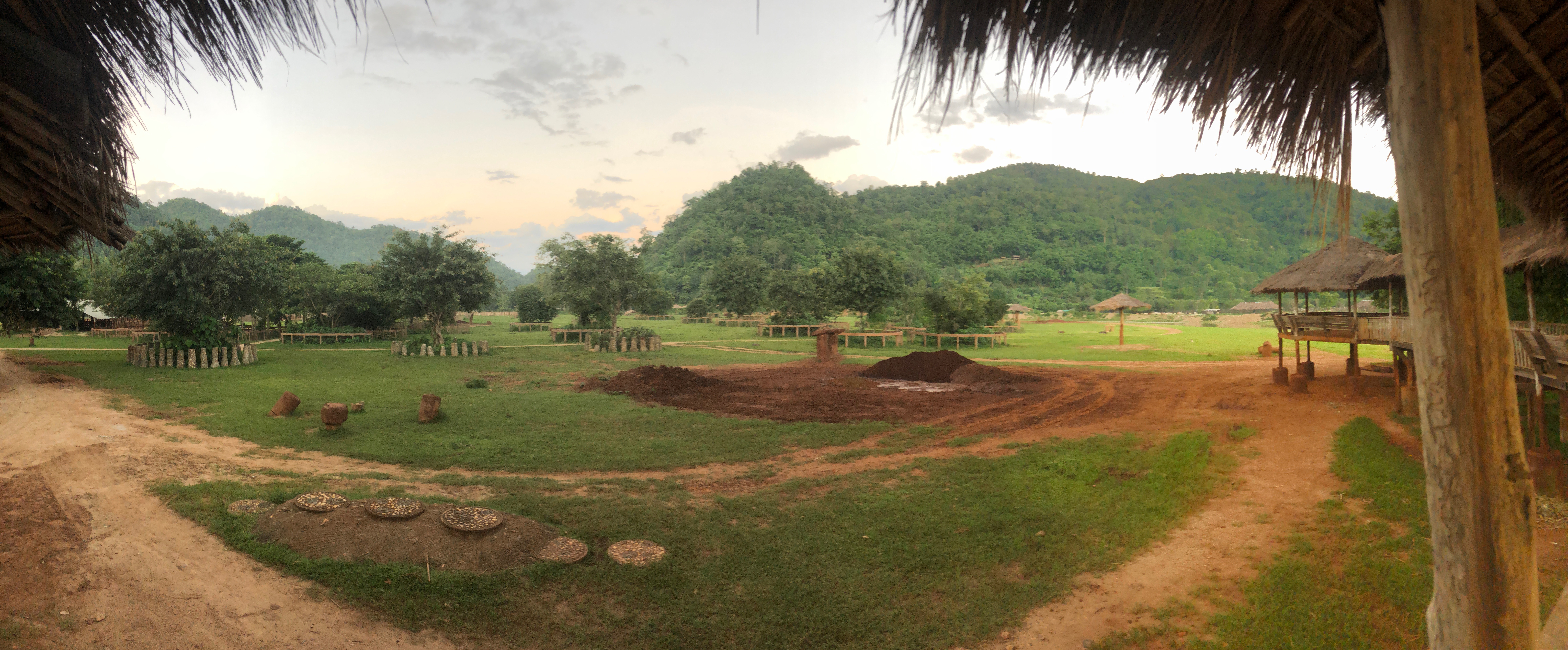
The first excursion (and the one I was most excited to take part in) was my overnight stay at the Elephant Nature Park (ENP). The day started at their offices in the center of Chiang Mai proper where they picked me and my friend, Lindsey, up to make the hour drive to the park. On the way, we watched a documentary that detailed when and how we were allowed to interact with the elephants (i.e.: never walking behind the elephants, only touching them on the neck behind their ears, and only touching their trunks during feeding time). The documentary also detailed the founding of ENP by Lek Chailert in the 1990s and her mission to rescue older elephants from the trekking and tourism industries throughout Thailand. The grounds of ENP are nothing short of extraordinary. in a large valley surrounded by dense greenery, elephants are free to roam with their mahouts (caretakers) close by. While mahouts in the tourism and trekking industries use fear and intimidation tactics to control their elephants, ENP has spearheaded a new way of working with elephants focused on using positive reinforcement by rewarding the elephants with their favorite snacks…watermelon and bananas!
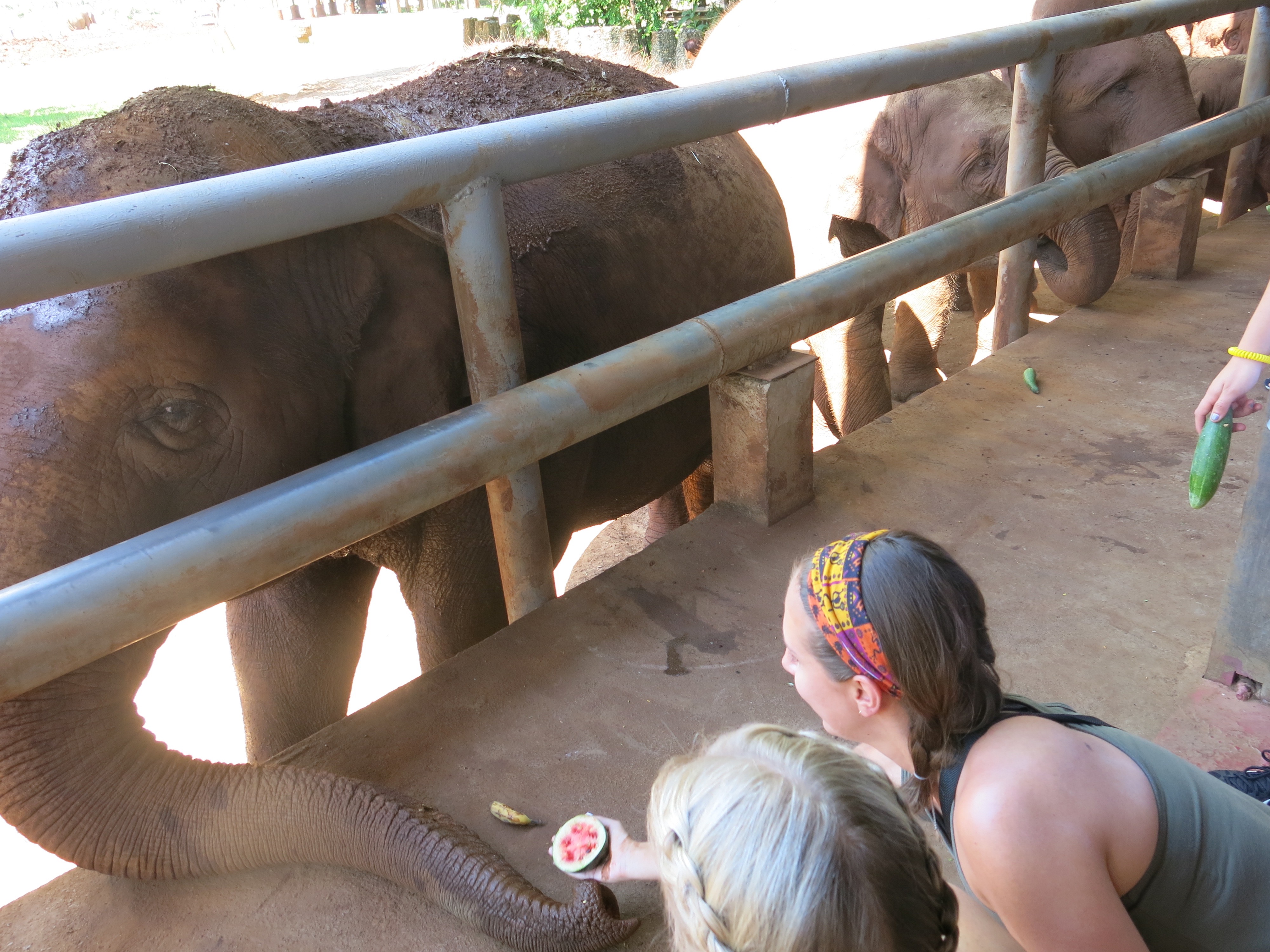
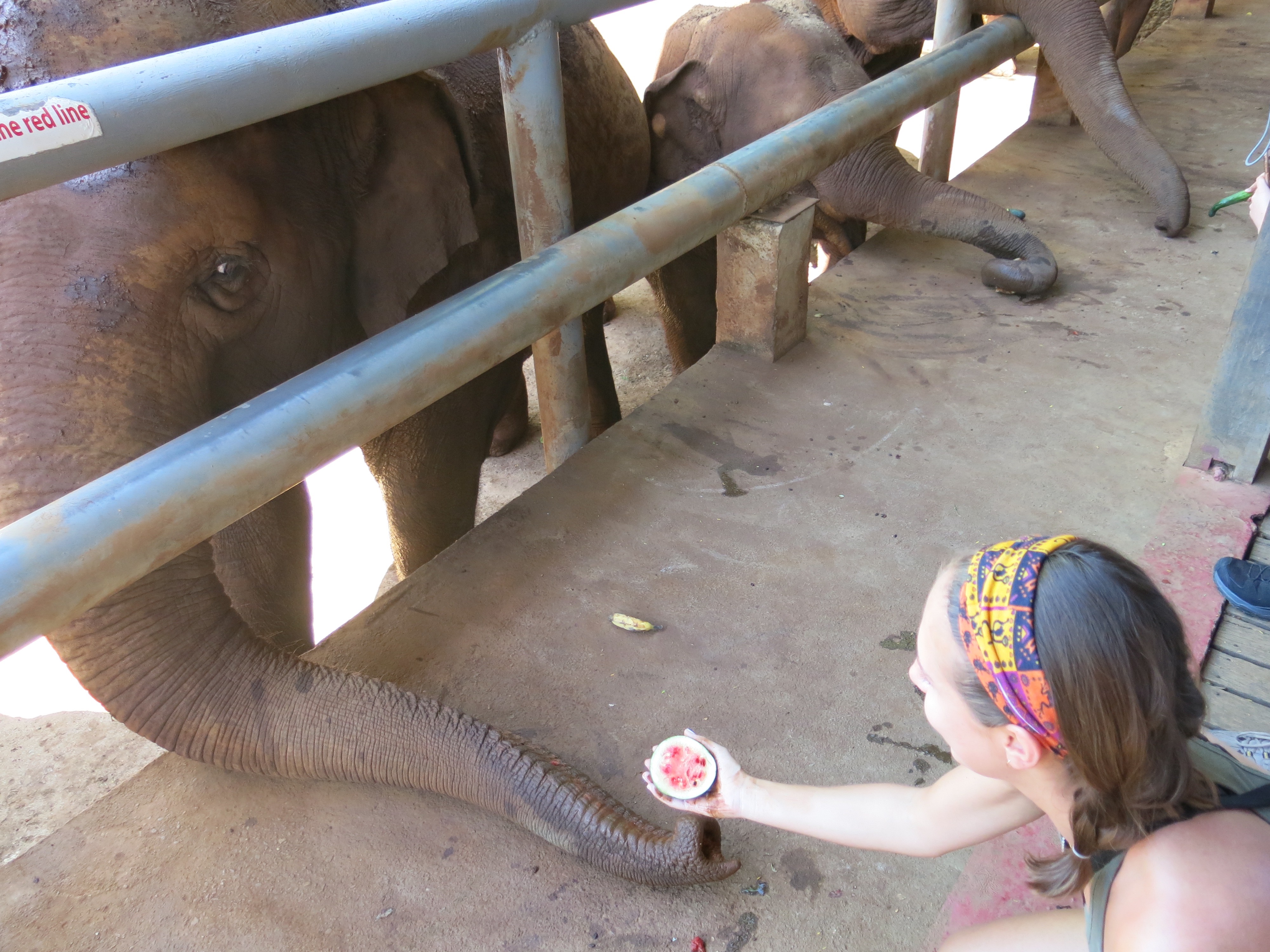
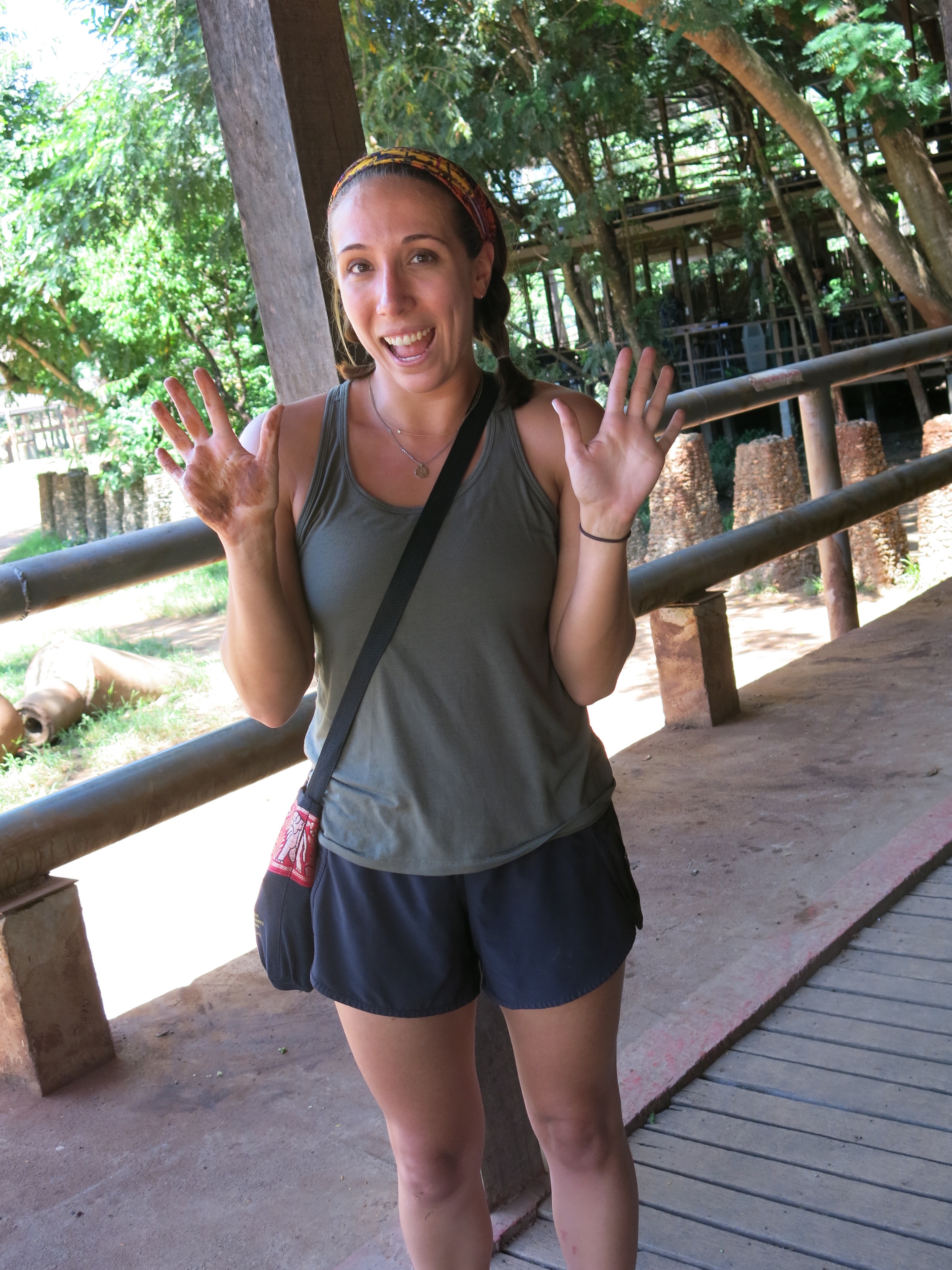
When we arrived at the park, we arrived just in time to feed a small group of elephants one of their many daily snacks. From a platform, the elephants would stick their trunks through the metal railing and collect the watermelon and bananas from our hands. If we dropped any of the fruit, we were told not to worry; elephants’ trunks are extremely strong and dexterous. They are easily able to collect fruit that has fallen to the ground.
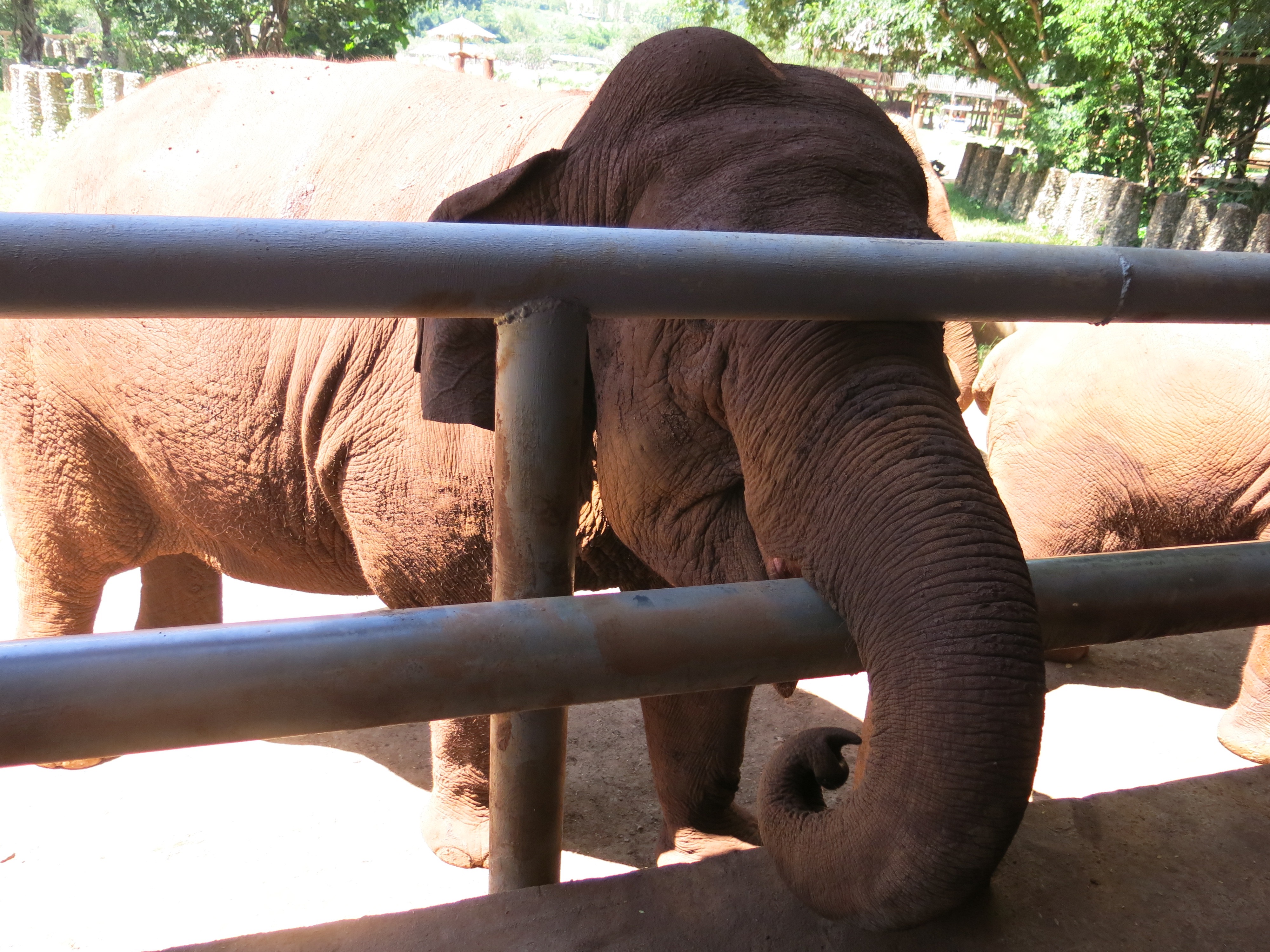
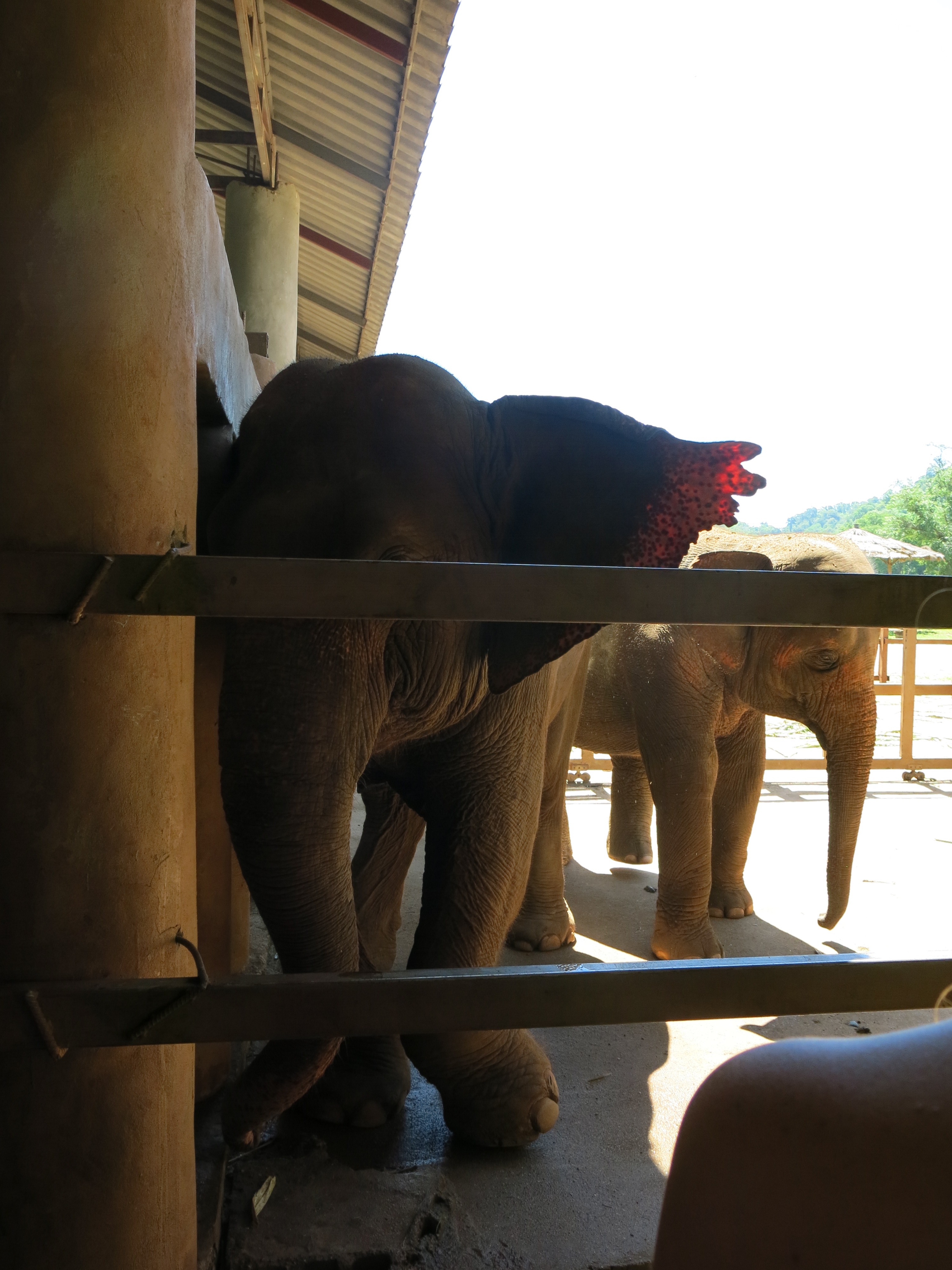
After feeding time ended, we spent the majority of the afternoon touring the park learning the different stories of the elephants housed on the grounds. While each story was unique, a common thread connected all of them. Either through work in the logging, touring, or trekking industries, all of the elephants had been terribly mistreated by humans for decades. Some had been purposefully blinded by their mahouts for refusing to work while others had broken limbs due to accidents working in the logging industry. Below is one elephant whose foot is permanently disfigured from a log falling and rolling onto it years ago.

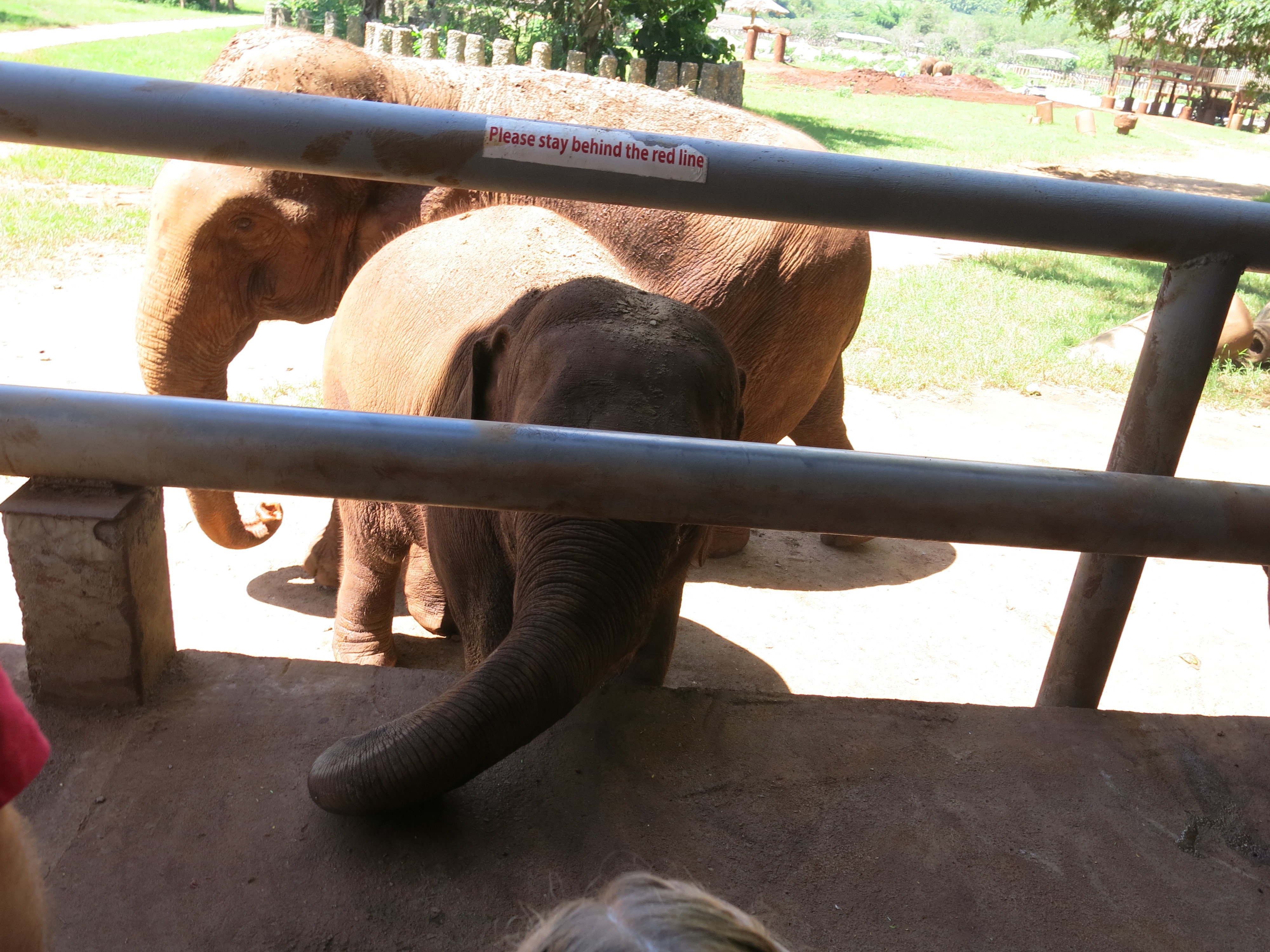
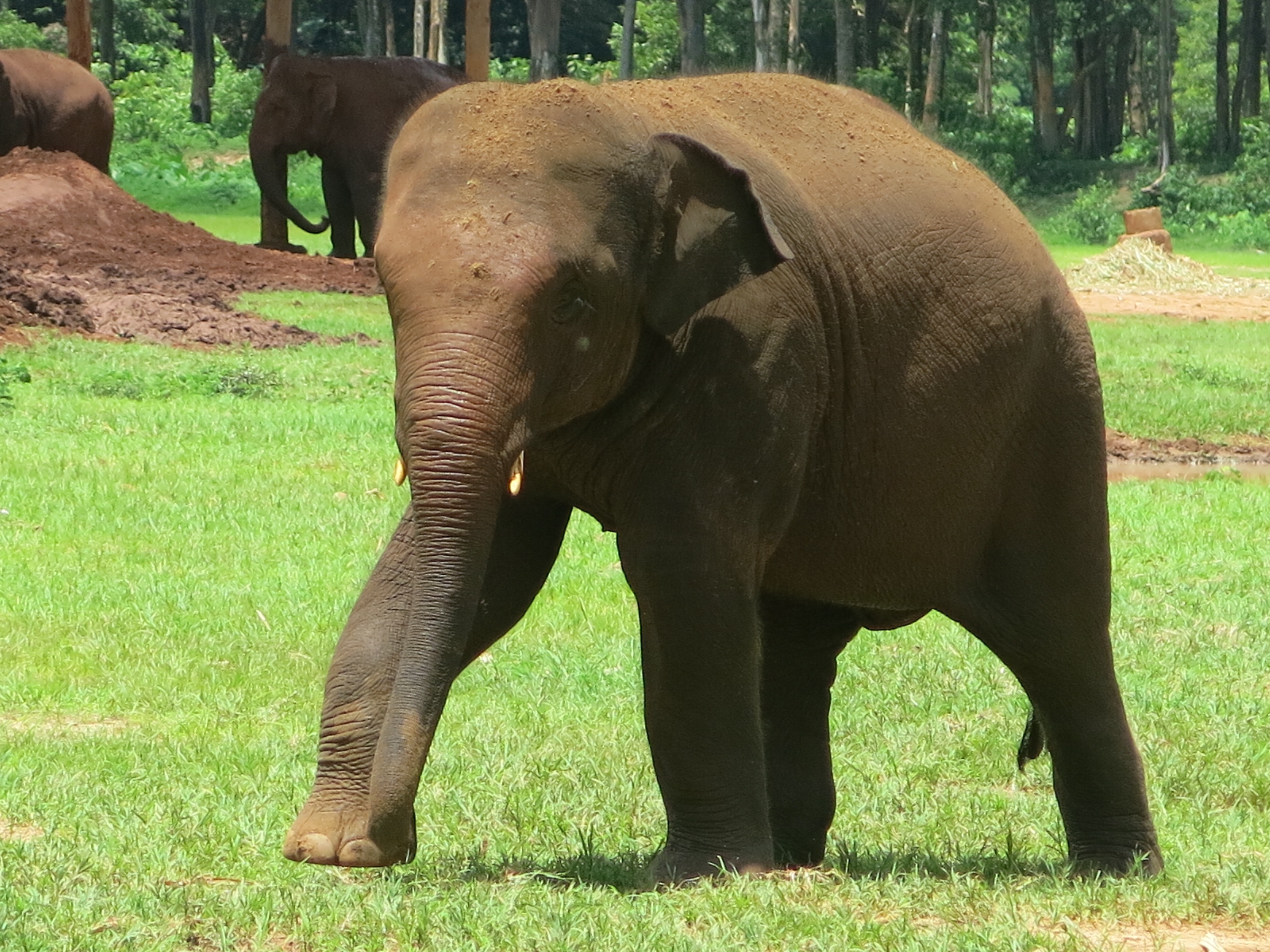
Almost all of the elephants at the park are older retired elephants that have been rescued from their previous lives to live the remainder of their days in peace. There is a noticeable absence of baby elephants at the park. The park focuses on rescuing older elephants rather than breeding more elephants. Although we met two younger elephants that had been born at the park, the majority of them are in their 50s, 60s, and 70s–their oldest elephant is over 100 years old! Below are two young elephants we were excited to see on our tour:

After our tour, we were allowed a few hours to play with and walk the many dogs that are also kept at park. The dogs have been rescued from the dog meat industry, puppy mills, and natural disasters throughout Asia. The incredible staff and volunteers are responsible for the dogs’ daily care and wellbeing. Many of the dogs roam freely around the park happily mingling with the elephants.
When the sun set, we ate a delicious vegetarian Thai dinner and headed off to our cabins for the night. Although we struggled to sleep in the heat, hearing the elephants trumpet in our backyards throughout the night made it all worthwhile.
We awoke in the morning to the sight of an elephant playing happily with a tire in our backyard. We dressed quickly and joined the others in our group for breakfast. We received large cloth bags and were instructed to fill those bags with as many bananas and pieces of watermelon as we could carry comfortably for a 20 minute walk. Our guide took us to ENP’s brand new enclosure where they were building a wrap around terrace for visitors to see the elephants interact with each other more clearly. A herd of sweet female elephants joined us for part one of their breakfast.
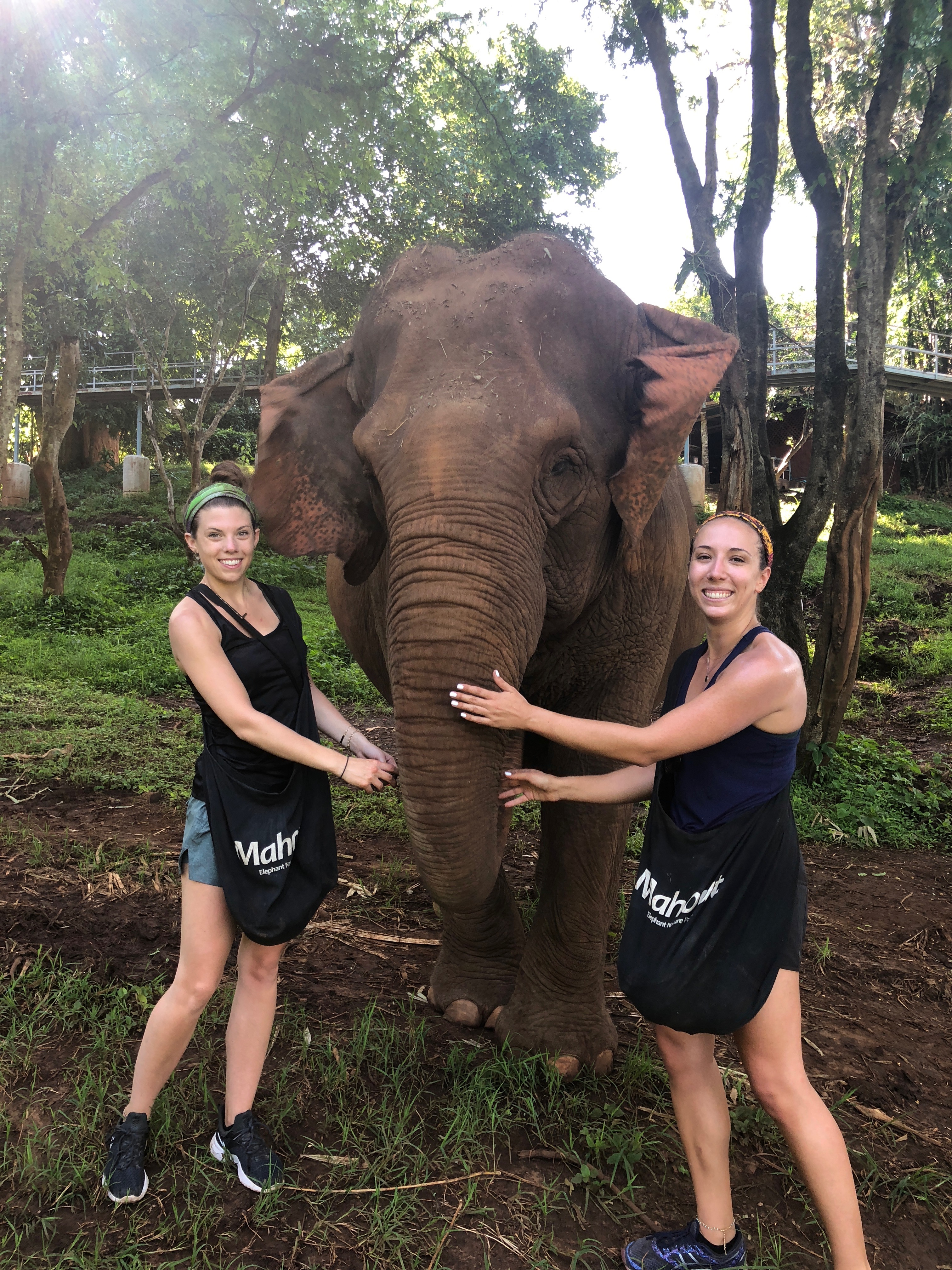
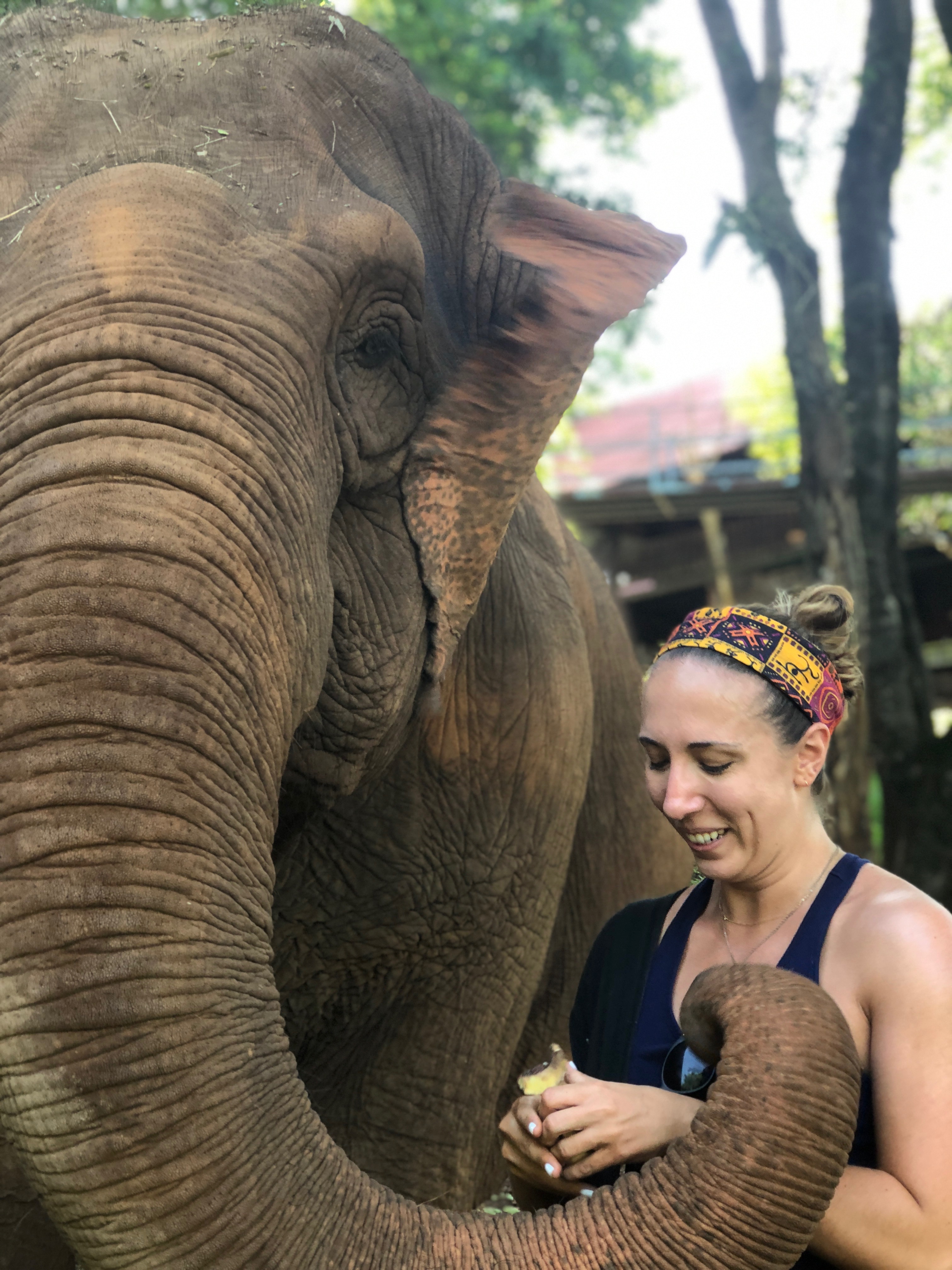
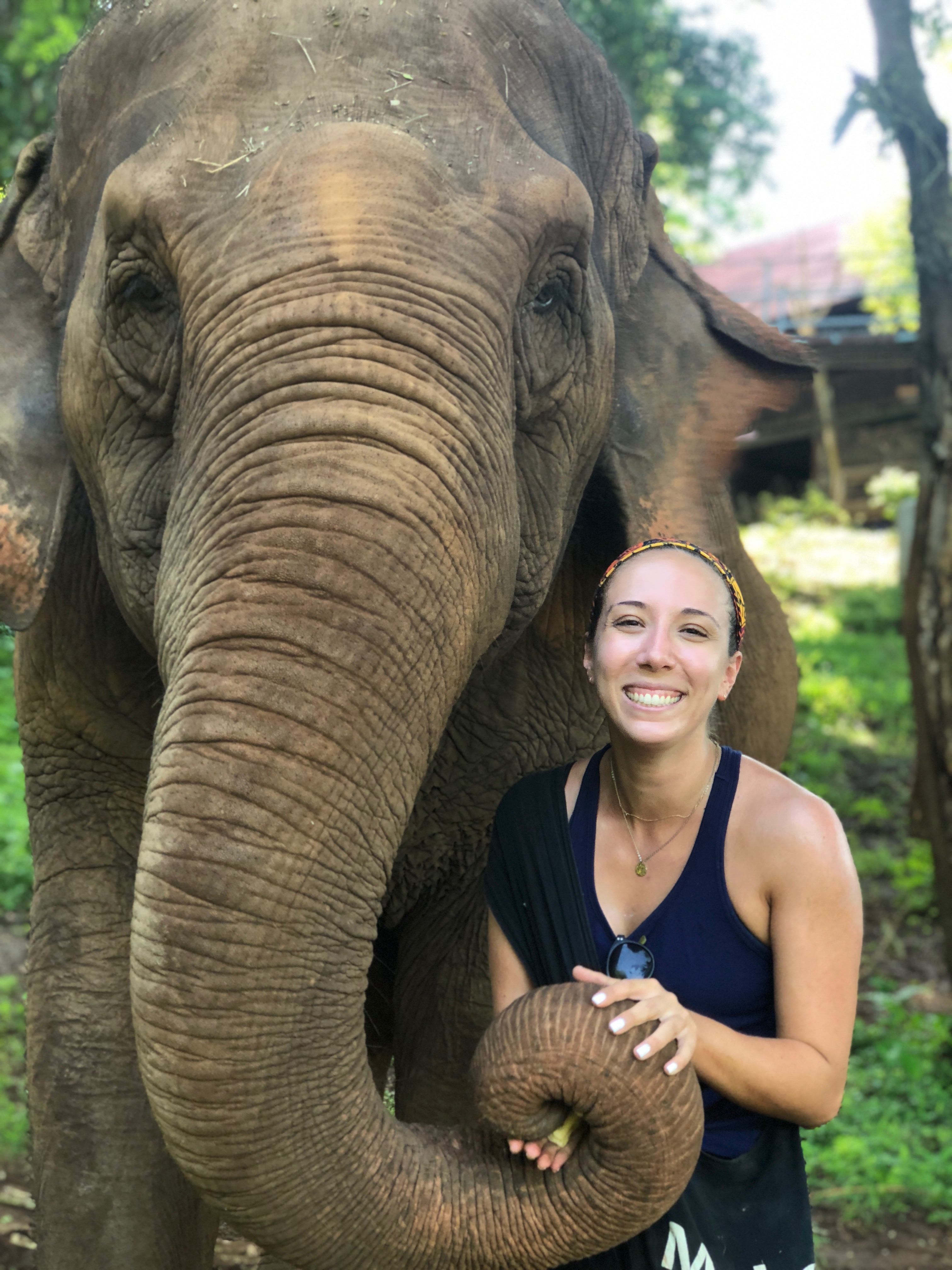
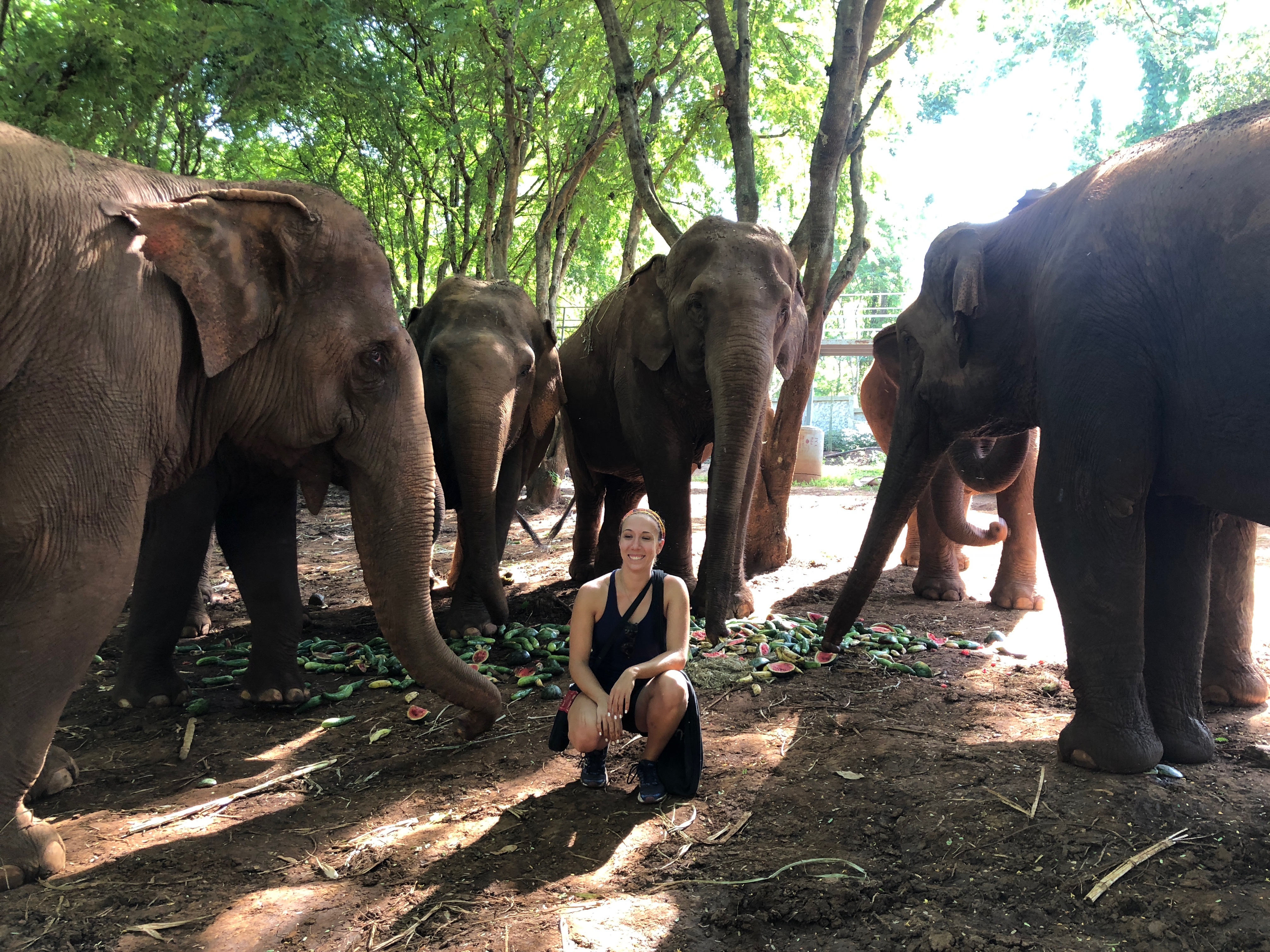
In the afternoon, our guide taught us how to make banana balls for the older elephants in the park. In the wild, elephants start to lose their teeth and over time are unable to chew their food. When the elephants can no longer chew, they eventually starve. At the park, the caretakers are able to extend the lives of their elephants by decades because they can make banana balls and other soft foods that the older elephants can easily chew and digest. We started by choosing the ripest bananas and squishing them between our fingers into a big basin. We added an assortment of vitamins and grains to the mixture for added nutrition and finally rolled them into balls about the size of our hands. We made about 50 balls and carried them over to where the older elephants reside. We all took turns feeding them. I will remember this incredible experience forever!!
 Travels in Thailand